The text was originally published in The Washington Post
By Kathy Lally
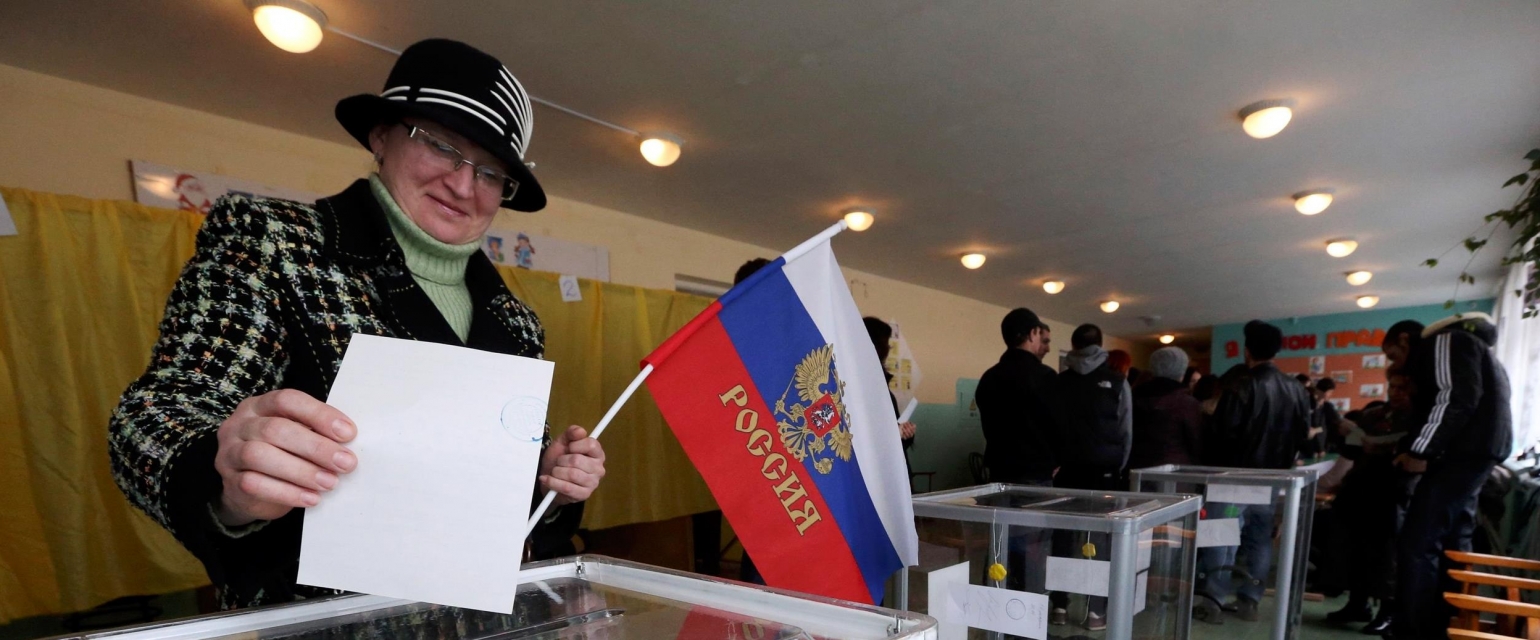
MOSCOW — Ukraine’s southern peninsula of Crimea has set a referendum for Sunday on whether it should secede and join Russia. Easy passage is expected. But the vote has been declared illegal by the government in Kiev, which was formed after months of demonstrations led to the overthrow of President Viktor Yanukovych in February. The United States and Europe have said they will not recognize it either.
Passions have run at a fever pitch in Russia and Ukraine. A poll taken from March 7 to 10 by the independent Levada Center found 79 percent of Russians were positive about incorporating parts of Ukraine into Russia.
At the same time, 83 percent of the respondents said they worried war could flare up between Russia and Ukraine. Russian officials have set off an emotional reaction by casting supporters of the Kiev government as bandits and Nazis bent on harming Russian-speakers, said Lev Gudkov, director of the Levada Center.
“The two-week-long propaganda and disinformation campaign, unprecedented in post-Soviet times, has had a powerful effect,” Gudkov said, describing the poll. “All alternative, non-official or independent sources of information and interpretation of the developments have been completely shut down.”
How did it come to this, and what happens next? Sergei Markedonov, associate professor of regional studies and foreign policy at the Russian State University for the Humanities, offers his ideas.
Q. What’s the underlying cause of the conflict?
A. The roots are in the collapse of the Soviet Union. The process of the dissolution is continuing until today, and I’m not sure when and where those processes will stop. Most of the parts of the USSR were created artificially, and they had different understandings of statehood when it came.
Q. Abkhazia and South Ossetia came under Russian protection after the Russian-Georgian war in 2008. Is Crimea different?
A. South Ossetia and Abkhazia really were lost earlier. They had gone through bloodshed and ethnic cleansing. Crimean separatism slept for 20 years. (In 1994 Crimeans voted for more autonomy for their region.) But after that Crimea played the game according to Ukrainian rules.
Q. What changed?
A. After the revolution in Kiev, the balance of interests was destroyed. Instead of dialogue, the new leaders in Kiev abolished the law protecting regional languages. (The new Ukrainian president refused to sign the law in the end, but passions were already inflamed among Crimea’s Russian speakers.)
Q. Why are Russia and Ukraine at odds?
A. Russia and Kazakhstan share a 4,400 mile border, longer than the U.S. border with Canada. There are no problems because the Kazakh regime is friendly with Russia. But the Maidan revolution presented a possible challenge to President Vladimir Putin, along with threats to Russia’s position in the Black Sea.
Q. What’s motivating the Crimeans?
A. People feel vulnerable to the new authorities in Kiev. But not everyone is pro-Russian. The Tatars are fearful because they identify Russia with the Soviet Union, which deported them from their homes in Crimea.
Q. Russian parliamentarians have been suggesting they are ready to make Crimea a part of Russia. Do you think this will happen?
A. I think the Russian reaction depends on the reaction of the United States and the European Union. At his press conference Putin said annexation is not an option for Russia. I think he is waiting to see what happens. If you want Russia to be more aggressive, please, behave more aggressively to Russia. It’s possible Crimea could exist as a de facto state, like Nagorno Karabakh or South Ossetia. Or it could join Russia. Of course, official Kiev cannot recognize the secession of Crimea, and how will it react?
Q. How do Russians regard Crimea?
A. Psychologically, it’s very important to the Russian people. My father served in Sevastopol. We all have relations in Ukraine. We’ve all read Tolstoy and his Sevastopol stories. Sevastopol for us looks like a symbol for our country.
Tolstoy was a young officer at Sevastopol in 1854, when Russia was defending its fortress against the Turks, British and French in the great Crimean War. He wrote about the blood spilled there, the brutality of war, a battle lost. Eventually Russia took Sevastopol back, only to see the Soviet Union lose it to the Germans after an eight month siege in World War II. Russians see it as theirs, but Ukrainians died there, too.






 To top