Zimbabwe and Russia have begun a new era of cooperation that promises to enhance both countries’ economies and increase political stability in Southern Africa and the world.
Those who fought for the overthrow of the colonial government in Rhodesia in the 1960s and 1970s remember with respect and gratitude the Soviet Union’s support for our drive for freedom. Not only did the Soviet Union train some of our freedom fighters on its territory, but it also opened its universities to many of our students, some of whom graduated, returned home and became leaders of a free Zimbabwe. It provided us with political, diplomatic and material support.
The Soviet Union, a great power at the time, stood together with freedom and peace lovers across the globe to help bring an end to colonialism. It is only fitting, then, that Russia, the Soviet Union’s cornerstone republic, has in recent years decided to assist Zimbabwe, which became independent in 1980, in taking its development to the next level.
Zimbabwe will not forget Russia’s rare veto of a U.N. Security Council resolution on July 11, 2008, that would have imposed additional sanctions on our country. That was an important assist, because our economy was already being hampered by illegal economic sanctions from world powers seeking to meddle in our internal affairs. We are also grateful that China, which has been a major investor in our country, vetoed the same resolution.
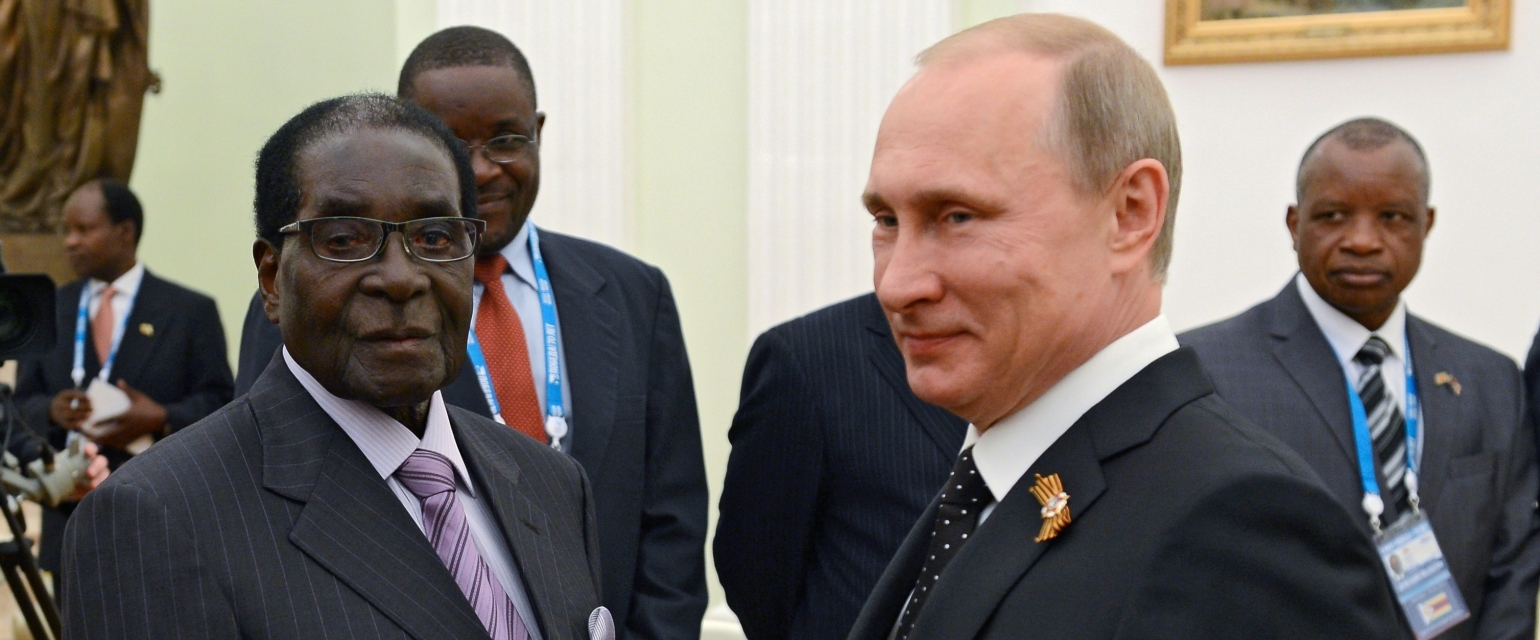
Zimbabwe is grateful that Russian President Vladimir Putin pledged in May of this year to strengthen political and economic cooperation between our countries.That pledge came at talks in Moscow between President Putin and Zimbabwean President Robert Mugabe during Russia’s celebrations marking the 70th anniversary of Victory in the Second World War. The meeting between our heads of state sent a clear signal that Russia was opening a new chapter in its relations with developing countries.
By economically empowering developing nations through mutual cooperation, Russia is helping counteract other, misguided powers’ efforts to bring about regime change in countries whose policies they dislike.
Zimbabwe is one of the countries that has suffered political and humanitarian disasters from these regime-change policies. Russia’s clear-cut stance on recognizing other countries’ national sovereignty has been both courageous and a breath of fresh air.
We are truly glad to see Russia assert its rightful place in geopolitics after decades of other powers’ attempts to push it to the periphery. Zimbabweans have great sympathy for the Russian people, who like Zimbabweans are now suffering under the same kinds of sanctions that have and continue to hurt our economies. We are confident that such sanctions will not break the Russian spirit, as they have not Zimbabwe’s.
The latest signal of Russia’s intent to strengthen its political and economic partnership with Zimbabwe is its $3 billion commitment to partner with us to develop our largest platinum mine. This deal, signed in September 2014 in the capital Harare, involves the joint Zimbabwean-Russian development of the nearby Darwendale mine. Russian companies will finance the project, plan and carry out the technical work involved in opening the mine, and supply equipment for the operation. When the mine is at capacity, it will produce 600,000 ounces of platinum a year, making it Zimbabwe’s largest platinum operation. The deal “will go a long way towards fulfilling our natural desire to elevate the level of our economic cooperation to the same level as our diplomatic cooperation,” our Foreign Minister Simbarashe Mumbengegwi noted at the signing ceremony.
We are confident that this is only the beginning of Zimbabwean-Russian cooperation in economic affairs. In addition to mining, the two governments are exploring other ventures in the energy, agriculture, manufacturing and industrial sectors.
We are delighted that Russia will be participating in next year’s Zimbabwe International Trade Fair, which will run from April 26 to 30 in Bulawayo, Zimbabwe’s second largest city. We look forward to seeing a number of Russian companies represented at this premier African trade and development event. We look forward not just to years, but to decades, of closer Zimbabwean-Russian ties.
Brigadier General Mike Nicholas Sango is Zimbabwe’s Ambassador to the Russian Federation. He can be followed on Twitter at: @ZimAmbRu .





 To top